

Lesson 2
Family Data File
Lesson 3
Attendance
Lesson 4
Parent Engagement & Strengthening
Lesson 5
Health & Social Services
Lesson 6
Expulsion & Suspension
Lesson 7
Community Involvement
Lesson 8
Site Licensure & License Exempt
Lesson 9
Staff-Child Ratios
Lesson 10
Classroom Assessment System
Lesson 11
Nutritional Needs
Lesson 12
Desired Results Profile & Data
Lesson 13
Parent Survey
Lesson 14
Staff Qualifications
Lesson 15
Staff Development Program
Lesson 16
Refrain from Religious Instruction
Lesson 17
Inventory Records
Lesson 18
Program Self-Evaluation
Lesson 19
Contractor Parent Policies
Lesson 20
Fiscal
Lesson 21
Data Reporting

Requirement
A parent shall obtain & provide supporting documentation regarding the number of children & parents in the family as listed on the application for services.
Regulations/Reference
Title 5: 17761
Monitoring Review Evidence
Family Data File
Application for Services
Records of Children & Parents Counted in the Family Size
Watch Video Lesson ❯
Video Description: This video explains how to document and determine family size.
Sample Forms/Tools ❯
Review Sketch Pad Notes ❯
Definitions

Family means the parents and the children for whom the parents are responsible, who comprise the household in which the child receiving services is living.
When a child and their siblings are living in a household that does not include their biological or adoptive parent, “family” is defined as the child and their related siblings.
Parent means a biological parent, adoptive parent, stepparent, foster parent, caretaker relative, legal guardian, domestic partner of the parent, or any other adult living with the child who has responsibility for the care and welfare of the child.
When to Determine Family Size

For Part-Day Preschool programs, family size is determined at the time of certification and recertification.
Tip: At certification, think of it as taking a “snapshot in time.” What is the family’s current family size?
Documentation of Family Size
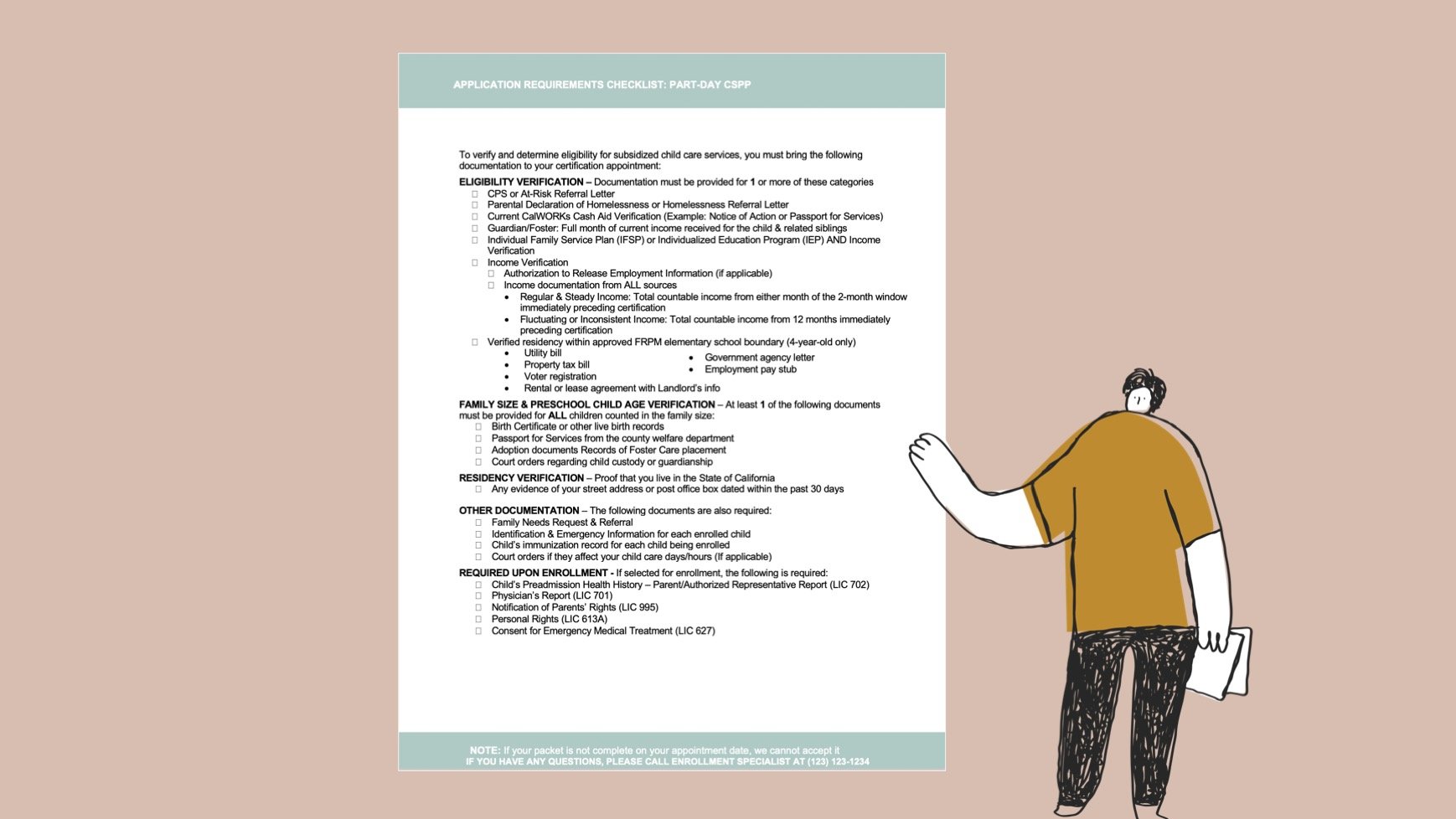
At least one document for each child counted in the family size must be on file that indicates the relationship of the child to the parent. Acceptable documentation may include:
Birth certificate
Child custody or court order
Adoption documents
Foster care placement records
School or medical records
County welfare department records
Other reliable documentation indicating the relationship of the child to the parent
What this might look like in a program:
A Parent Enrollment Checklist is used to request family size documentation from the parent.
The Enrollment Specialist:
Verifies that the documentation clearly indicates the relationship of each child to the parent.
Confirms that there is at least one document on file for each child counted in the family size.

Note Regarding Caregivers Without Legal Guardianship:
In some situations, parents rely on another adult, such as a grandparent or relative to care for and make decisions for their child without establishing formal legal guardianship. There are many reasons this may occur, including strained relationships, lack of parental consent for guardianship, or a preference to avoid the legal process. In many cases, the caregiving arrangement is intended to be temporary.
As an alternative to legal guardianship, caregivers may complete a Caregiver’s Authorization Affidavit. This official form is recognized in California and allows a caregiver, an adult with whom the child is living, to make certain decisions related to the child’s education and care.
Sample Scenarios




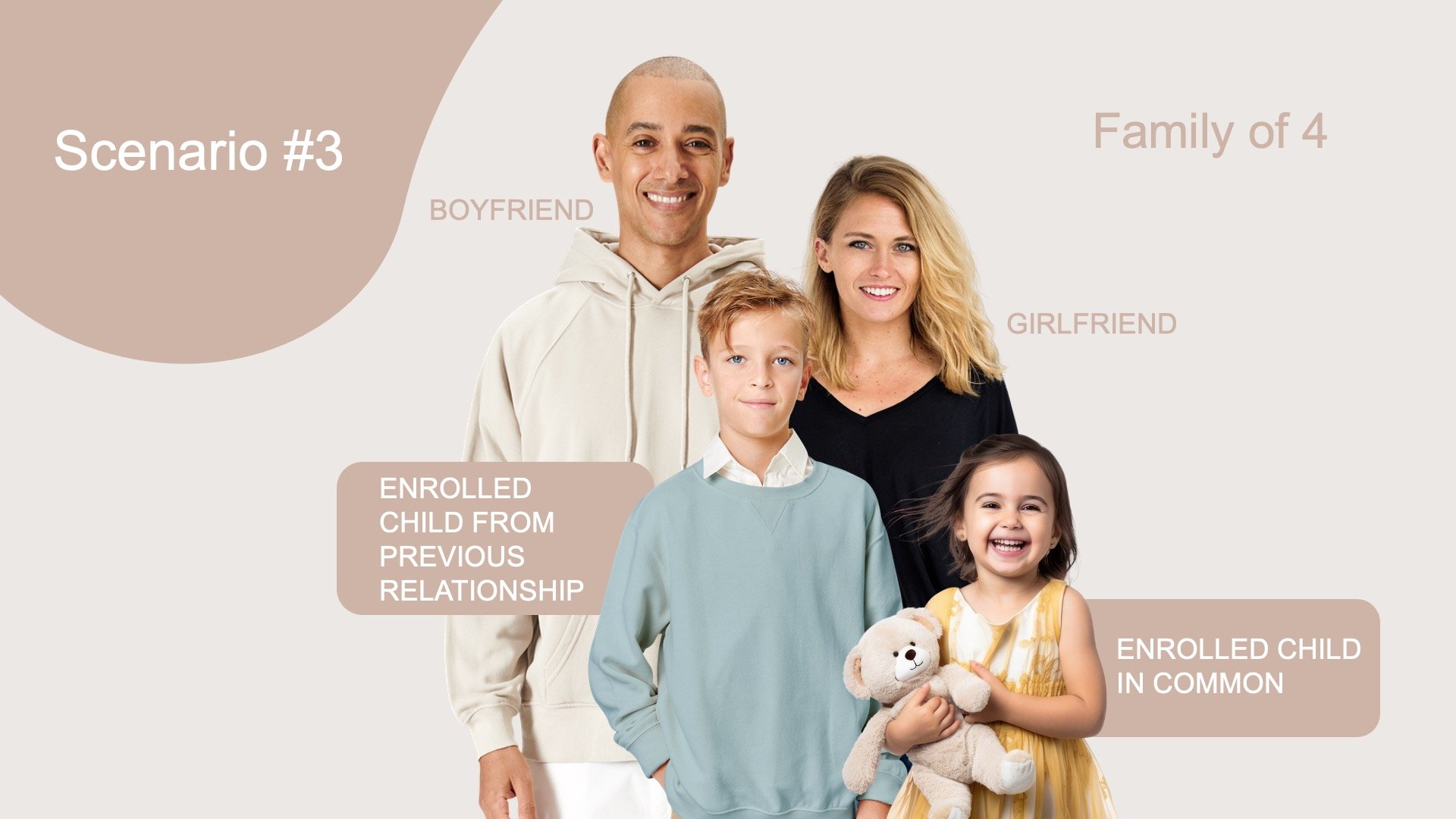

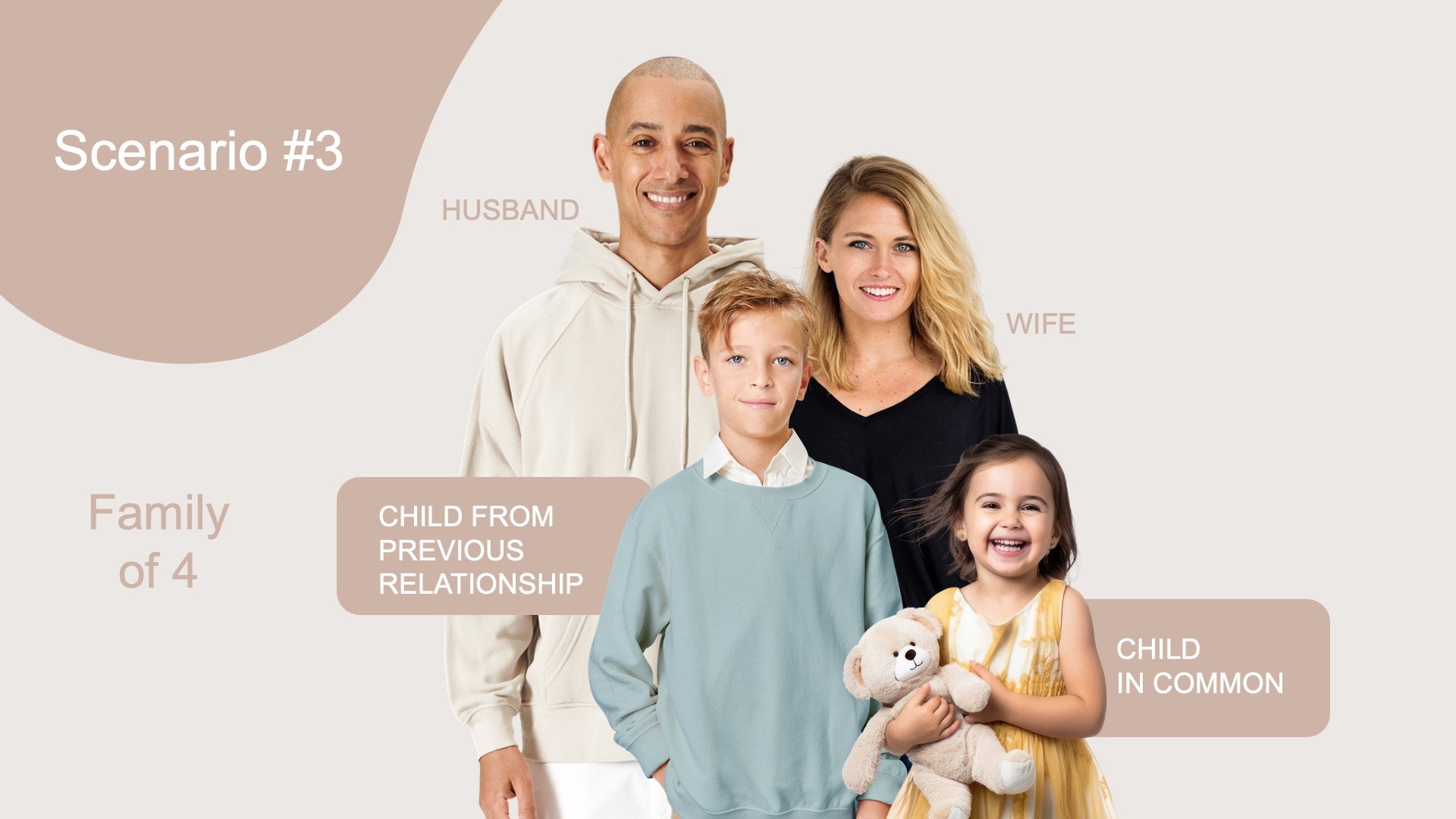
Complete Knowledge Check ❯
After reviewing the video lesson & sketch pad notes, it’s time to check for understanding by completing a Knowledge Check. Note that Individual Knowledge Checks will conclude with a Certificate.