

Lesson 5
Parent Involvement & Education
Lesson 6
Health & Social Services
Lesson 7
Expulsion & Suspension
Lesson 8
Community Involvement
Lesson 9
Site Licensure
Lesson 10
Adult-Child Ratios
Lesson 11
Environment Rating Scale
Lesson 12
Nutritional Needs
Lesson 13
DRDP & Education Program
Lesson 14
Parent Survey
Lesson 15
Qualified Director
Lesson 16
Staff Development/
Provider Support
Lesson 17
Refrain from Religious Instruction
Lesson 18
Inventory Records
Lesson 19
Program Self-Evaluation
Lesson 20
FCCHEN Provider Participation
Lesson 21
Contractor Parent Policies
Lesson 22
Fiscal Essentials: CFCC Contract Type
Lesson 23
Fiscal Essentials: CCTR Contract Type
Lesson 24
Fiscal Audits
Lesson 25
Child Development Data Reporting

Compliance Indicator
There is a parent involvement and education component, including the sharing of program goals and structure with families. The program ensures that effective, two-way, comprehensive communication between staff and parents is carried out on a regular basis throughout the program year.
Regulations/Reference
CCD Program Instrument: II. Family Engagement CCD 07
Welfare & Institutions Code: 10207.5, 10208, 10240, 10250
Title 5: 18275
Monitoring Review Evidence
Parent Orientation Materials
Completed Parent/Teacher Conferences
Documentation of Parent Education Meetings | Info | Training
Parent Advisory Committee
Open Door Policy Statement
Parent Involvement Activities
Watch Video Lesson ❯
Accessibility Note: The complete accessible content is available in the video and transcript below. The transcript can be accessed using the transcript option in the video player controls. The slide deck is provided for visual reference and may not be fully accessible.
Video Description: This video provides an overview of the Parent Involvement and Education component and shares examples of how to meet the requirements in Family Child Care Home Education Network programs.
Sample Forms/Tools ❯
Family Engagement Templates
Parent Handbook
Review Sketch Pad Notes ❯
Parent Orientation Materials

The regulations require a contractor to have an orientation for parents that includes topics such as program philosophy, program goals and objectives, program activities, eligibility criteria & priorities for enrollment, family fees and due process procedures.
What this might look like in a program:
Participant orientations are held as a group at the beginning of each program year & individually upon enrollment thereafter
Contractors share the orientation flyer, agenda, and sign-in sheet
The parent orientation video aligns with the participant handbook
Participants meet one-on-one with a site supervisor or teacher to go over licensing paperwork & receive a tour of the facility
Parent & Teacher Conferences
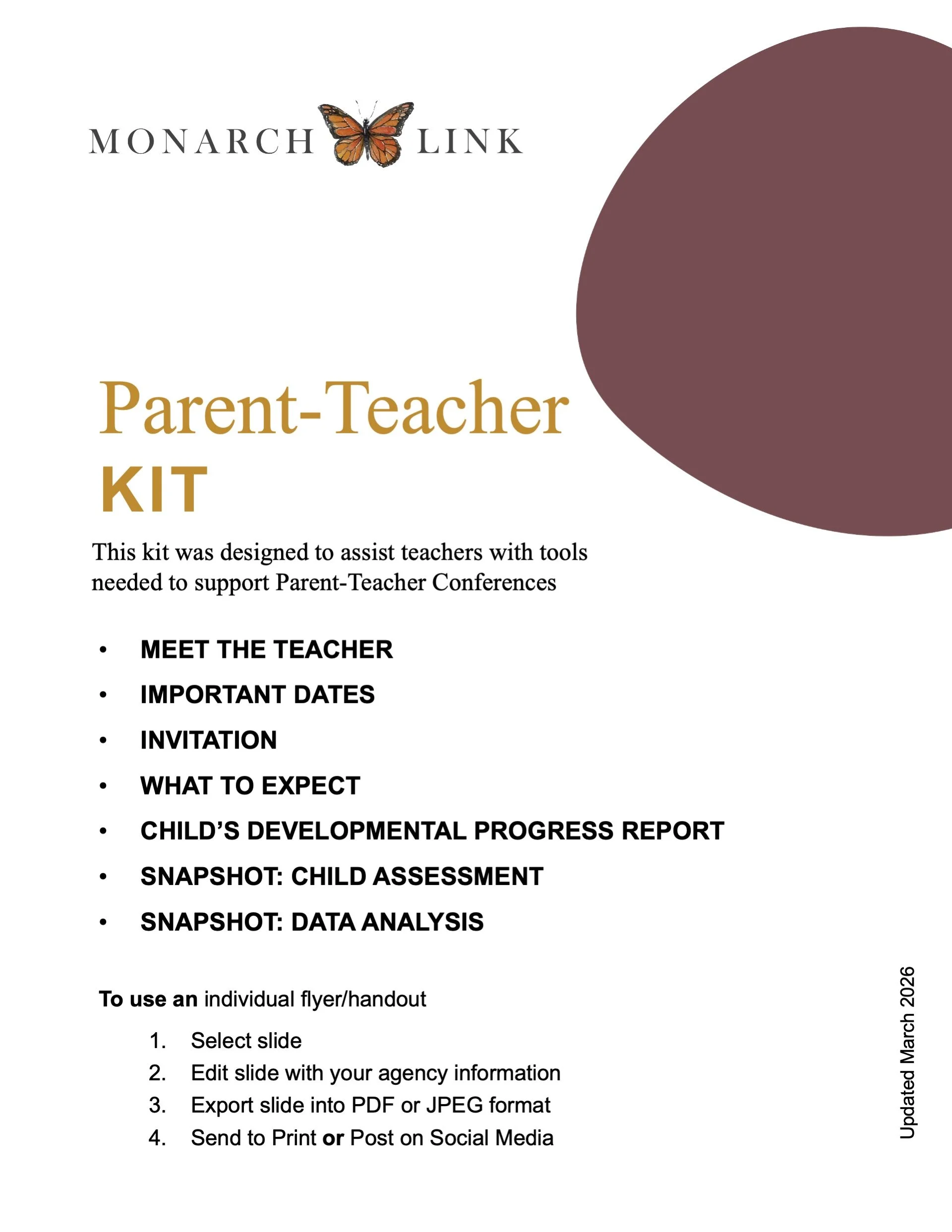

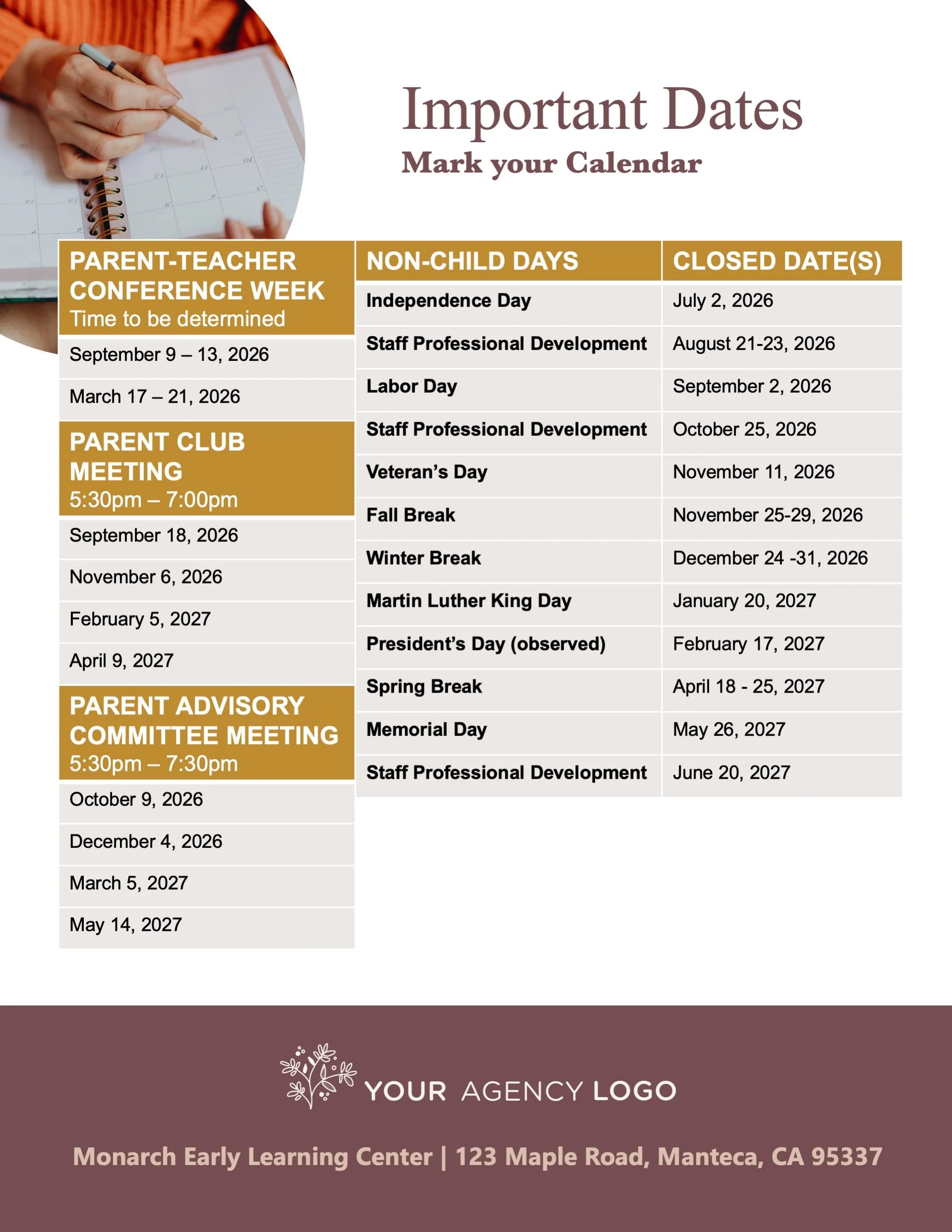

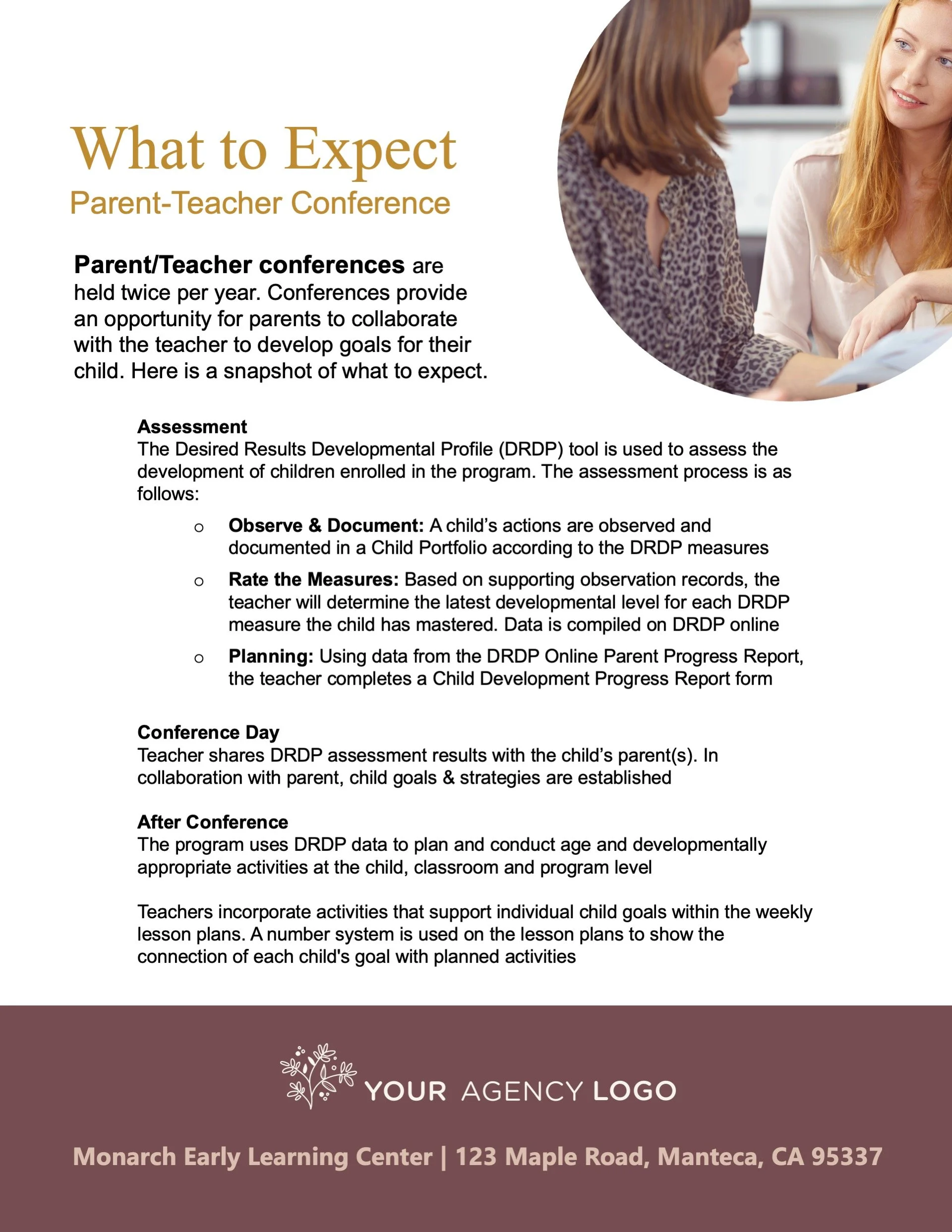
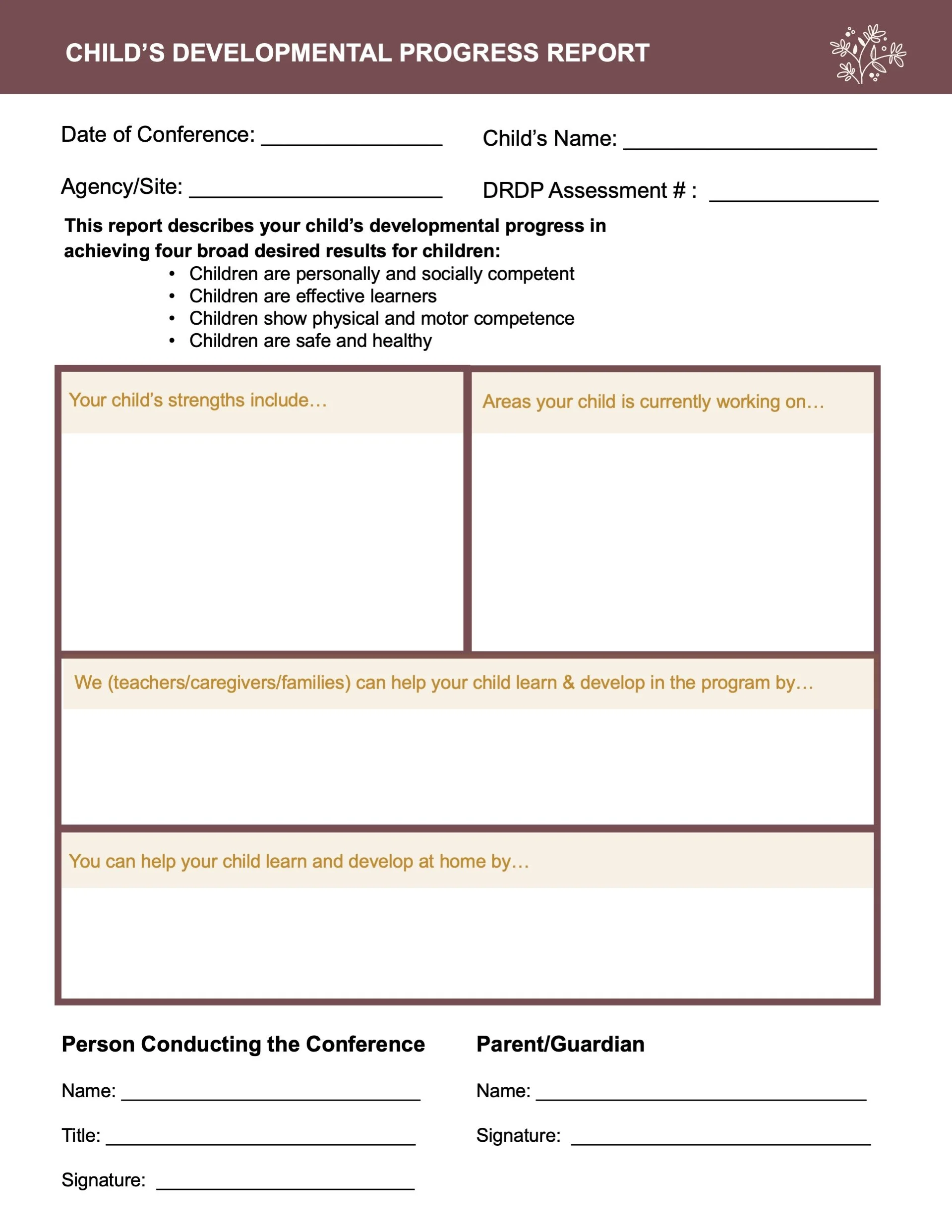
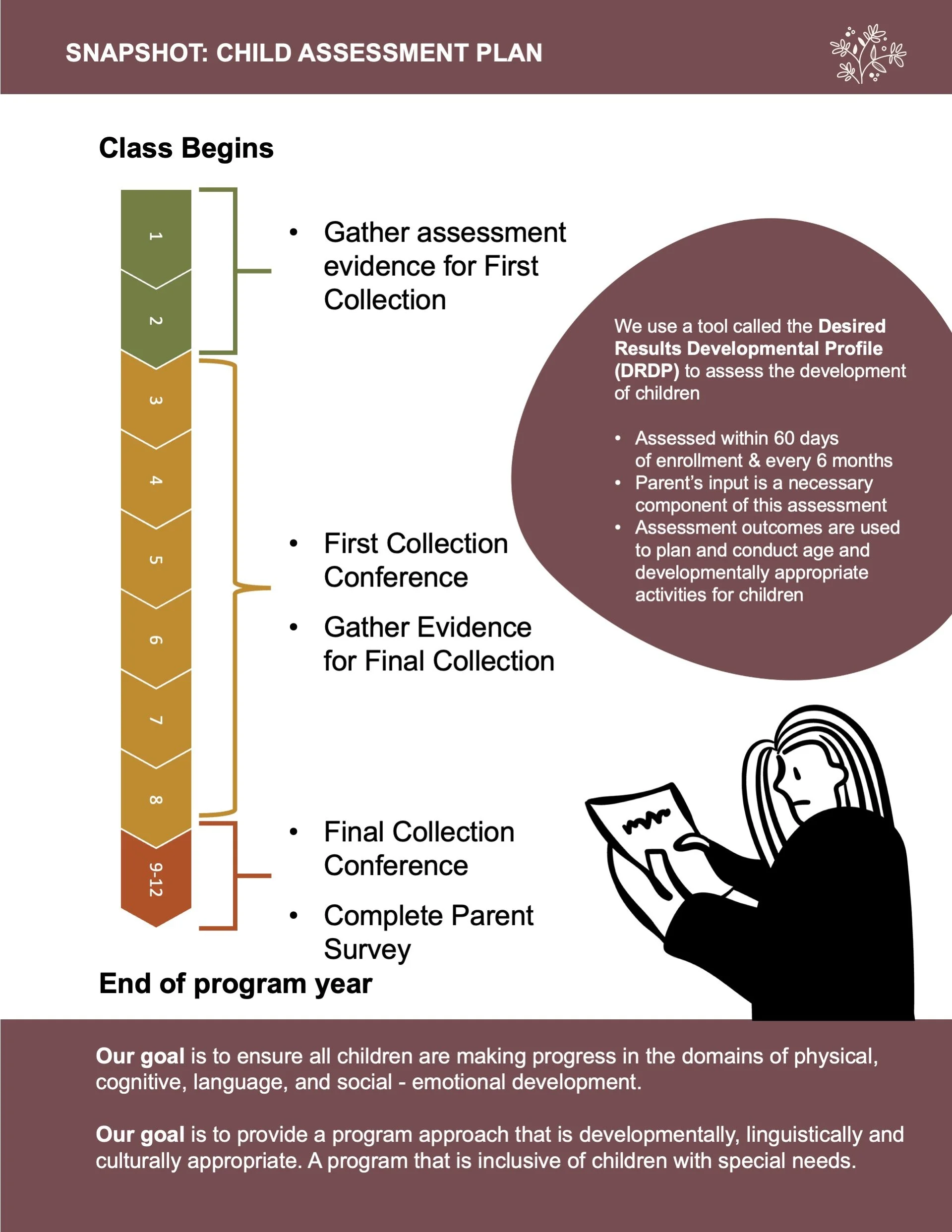
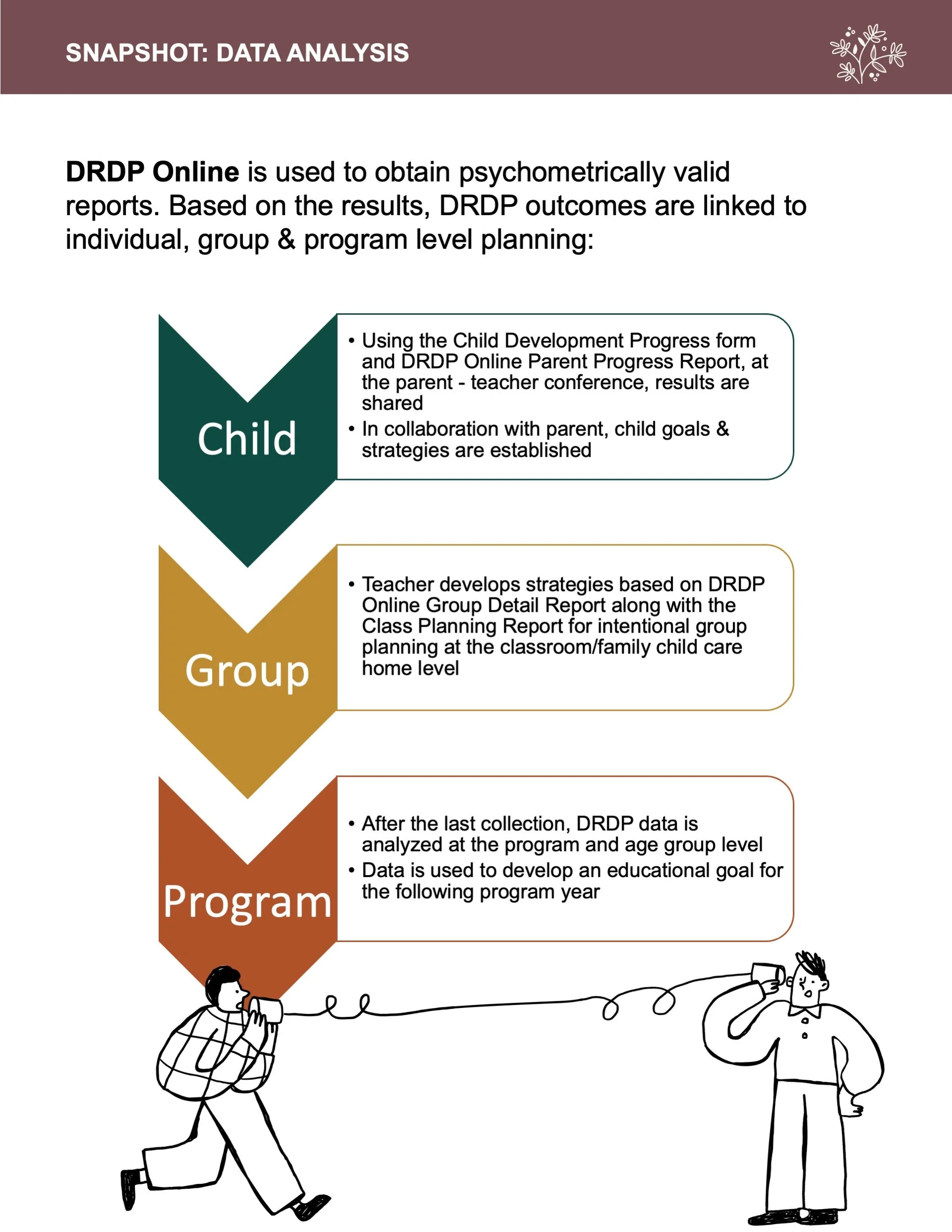
The regulations require that at least 2 individual parent-teacher conferences are held each year in order to share the results of their child’s assessments, screenings, progress & in collaboration with the parent & provider develop individual goals for their child.
What this might look like in a program:
Meet the Teacher/Provider handout is used as a starting point for building relationships with parents. It lets parents get to know their child’s teacher/provider. To show underneath it all, teachers/providers are real people who have a heart for teaching
Important Date Calendar includes when parent-teacher conference week for both the first & second collections will be held
Invitation & What to Expect handout are given to parent 3 weeks & again 1 week prior to their conference date/time
Using data from the DRDP Online Child Rating Report, teacher completes a Child’s Developmental Progress Report form that is shared with parent(s), along with their child’s portfolio. In collaboration with parent, child goals & strategies are established
Parent Meetings
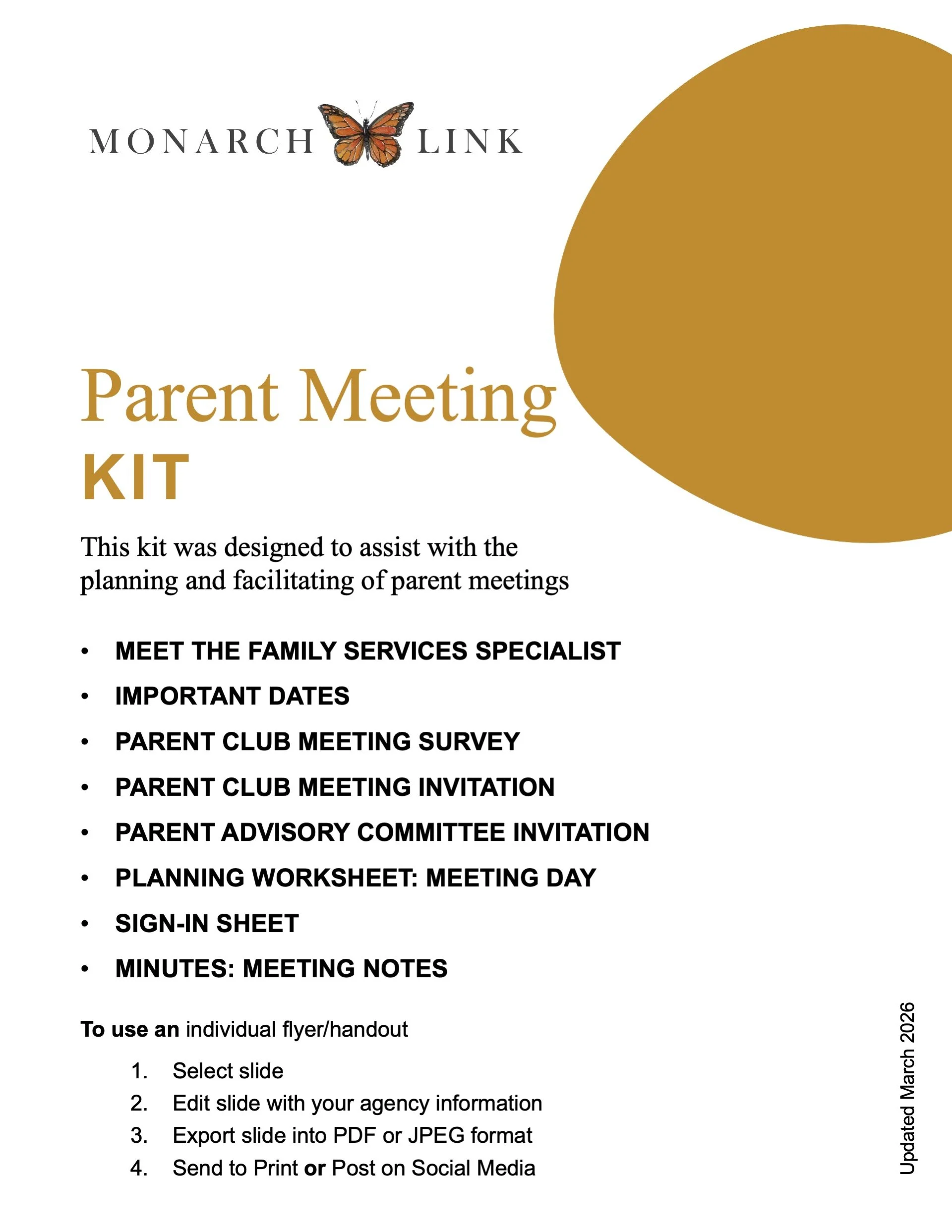


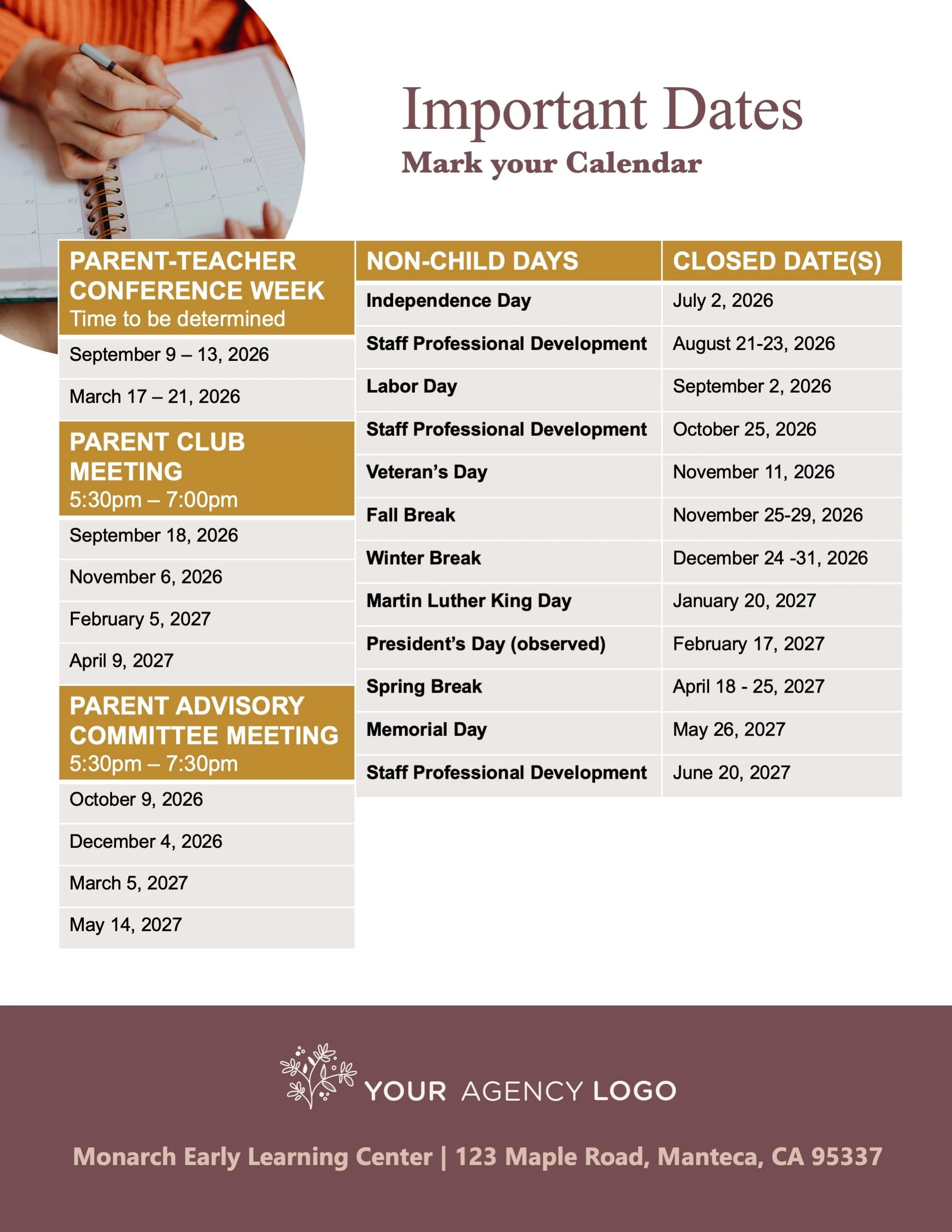
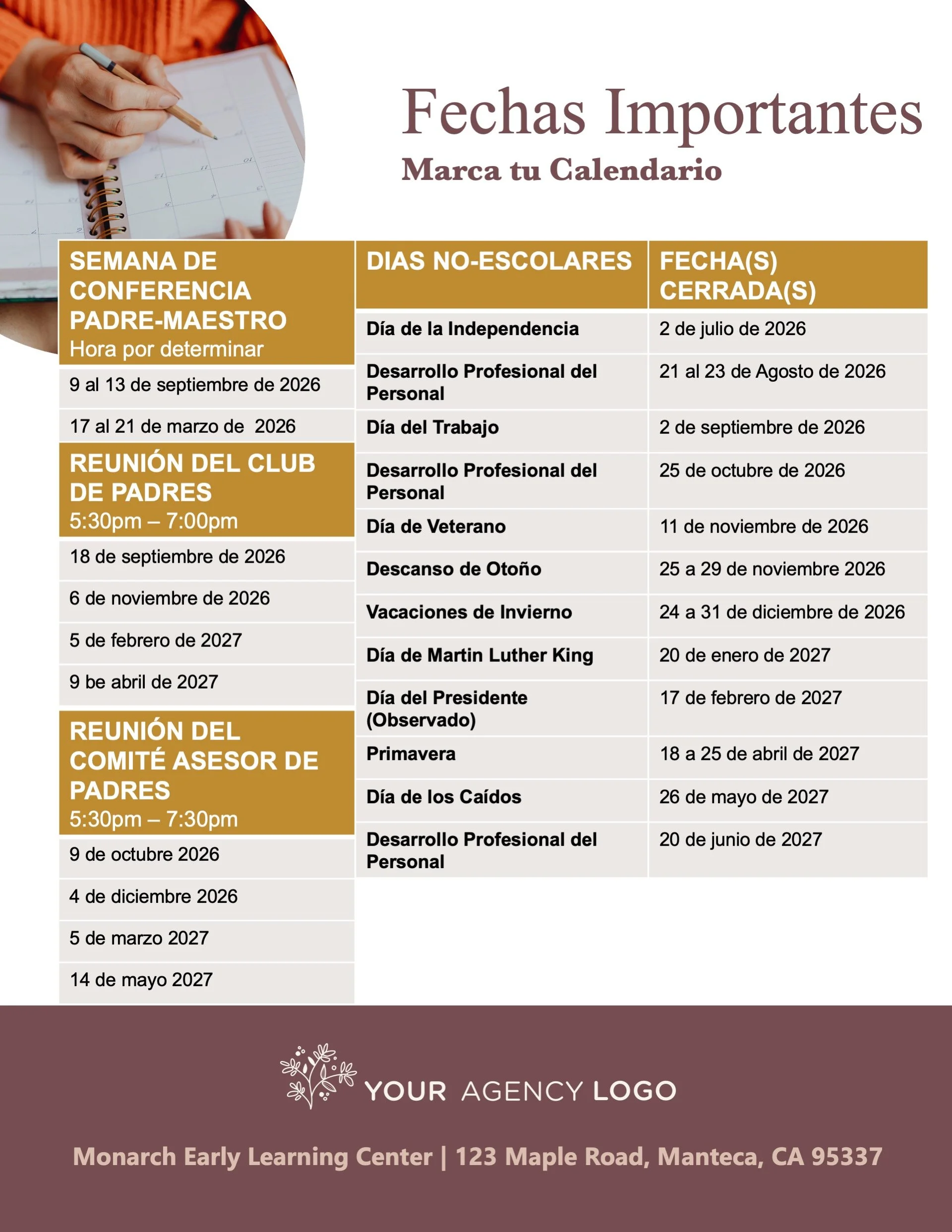
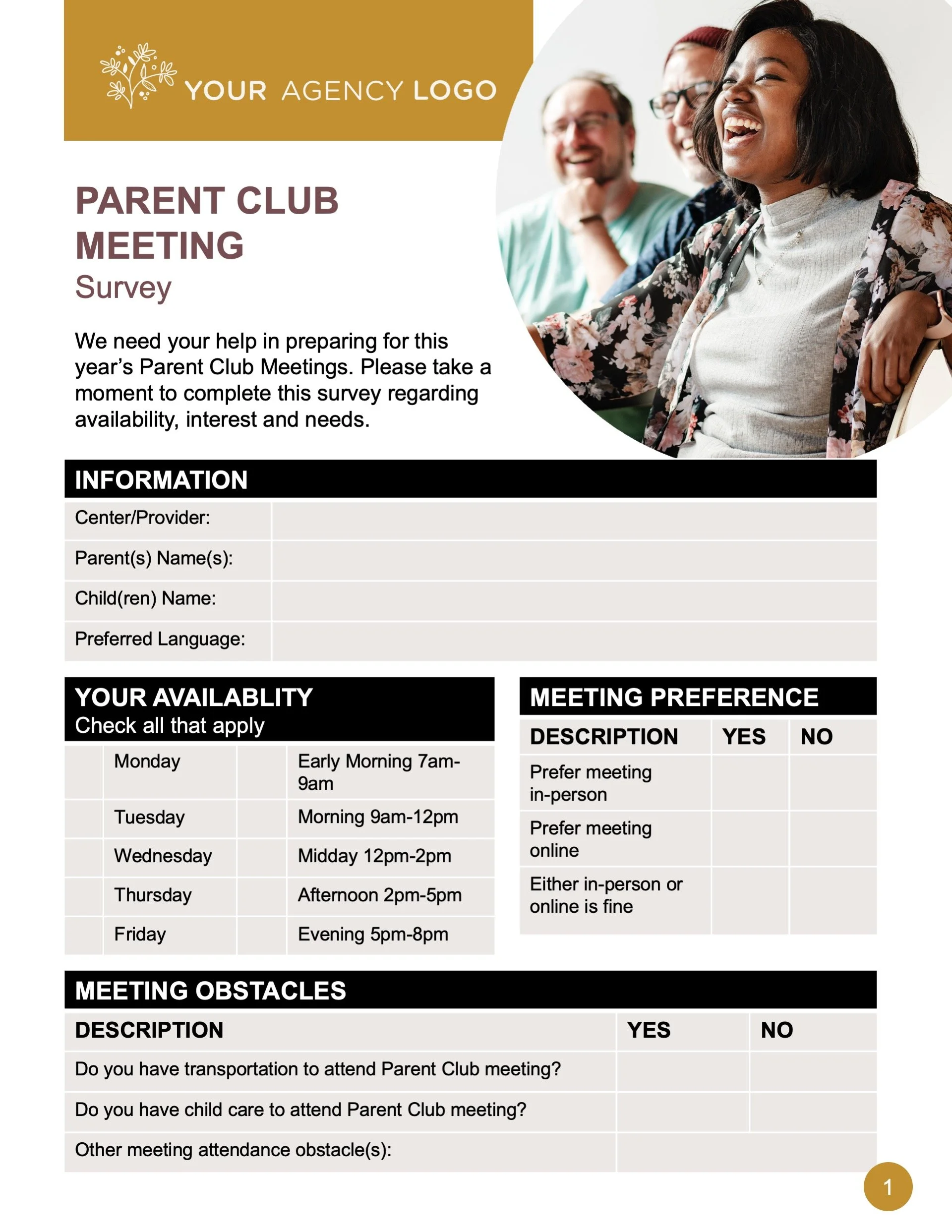
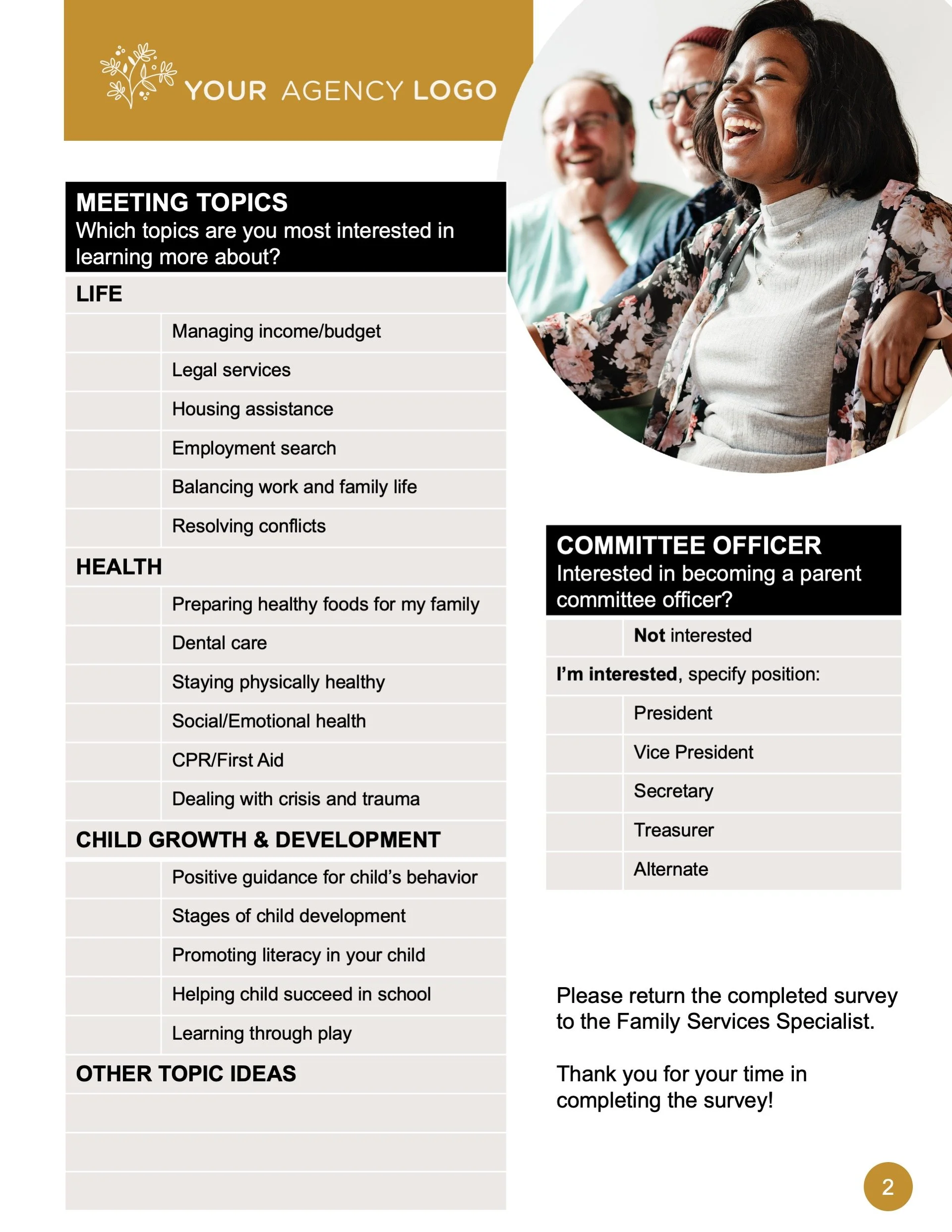
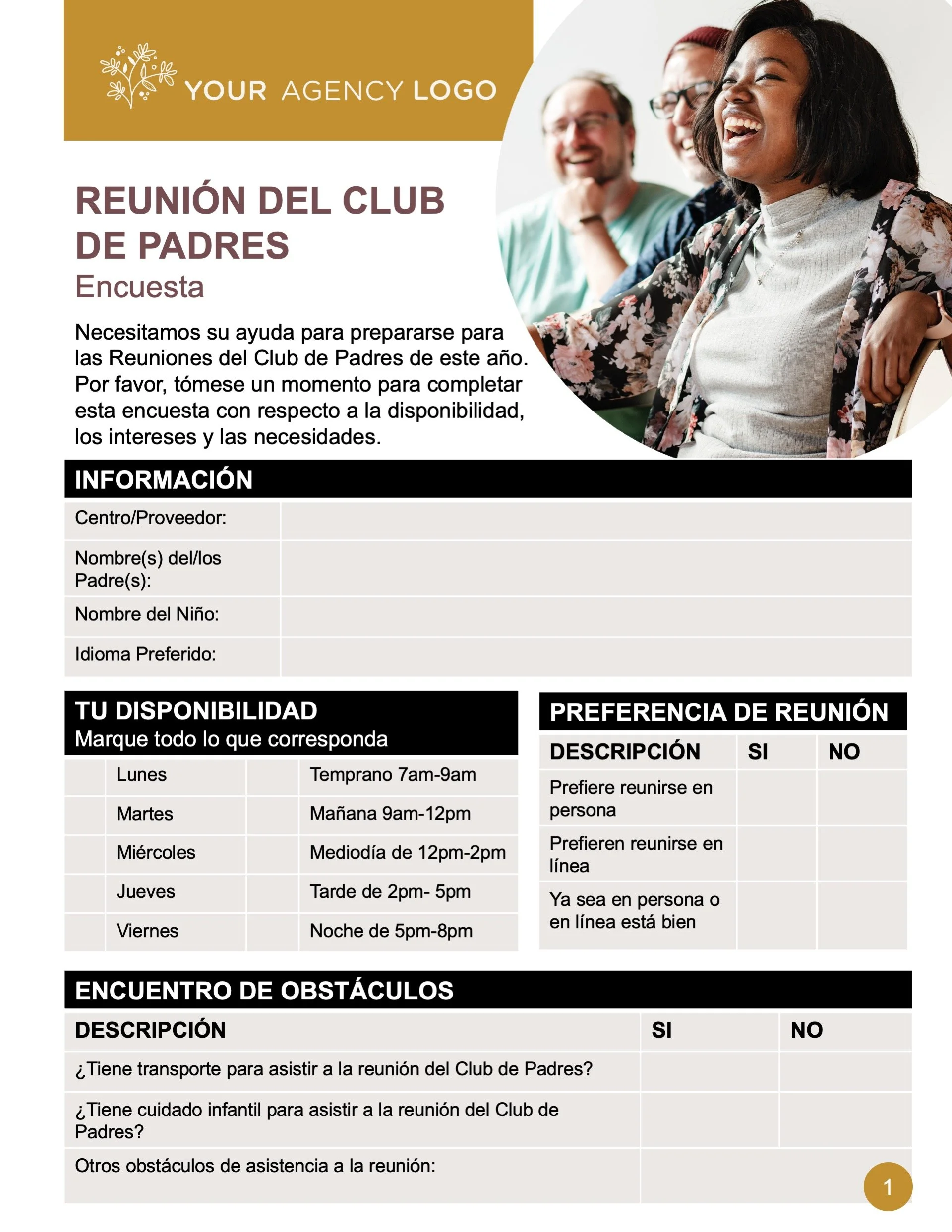



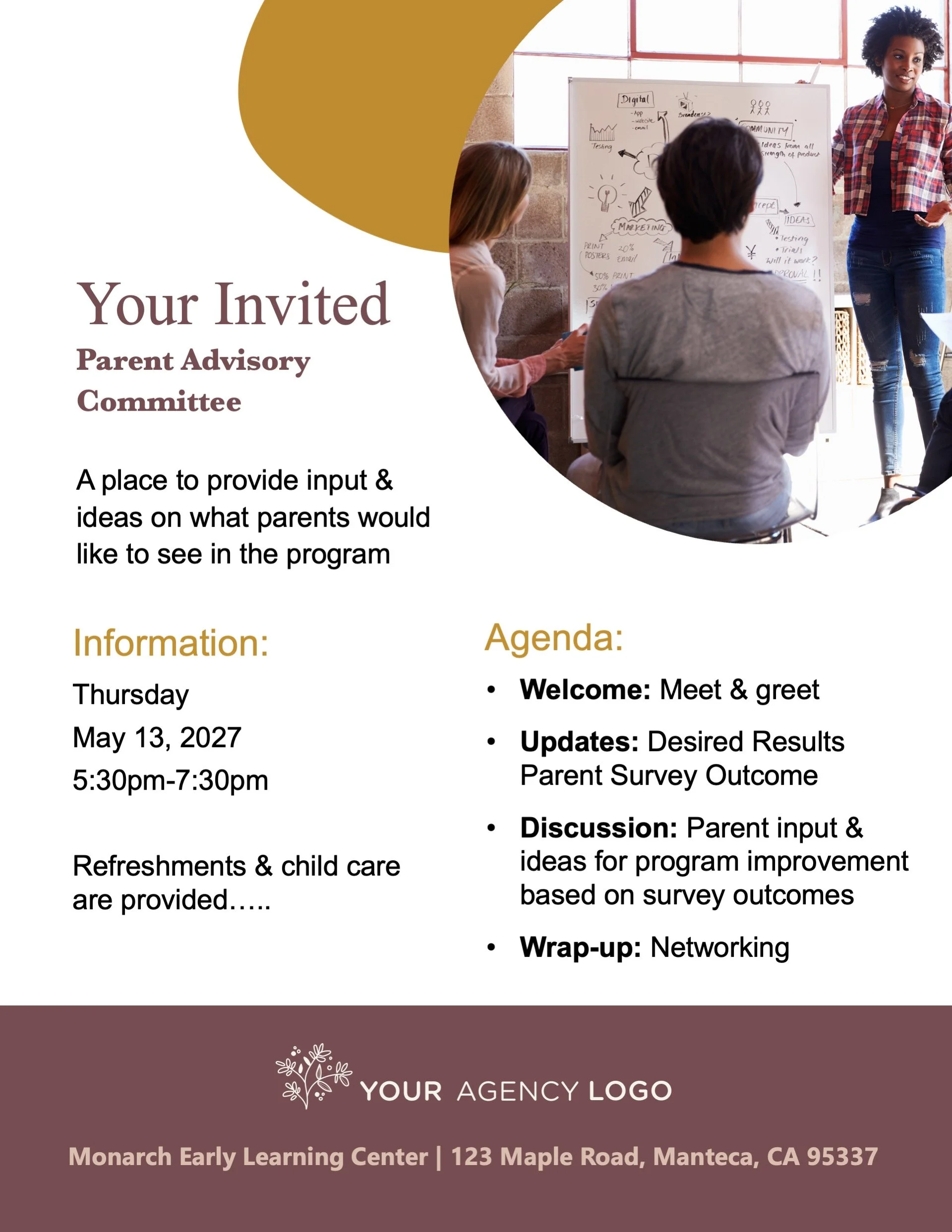
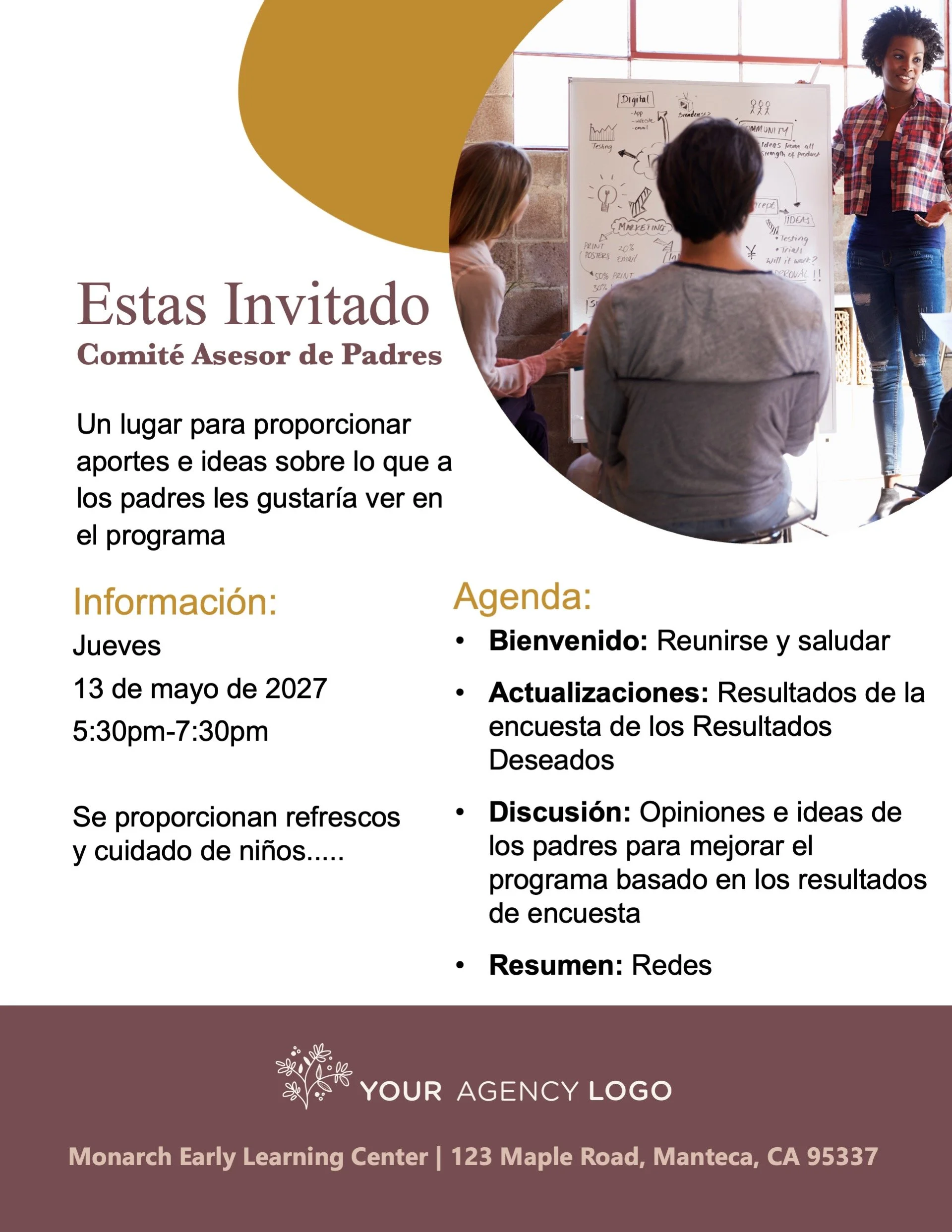
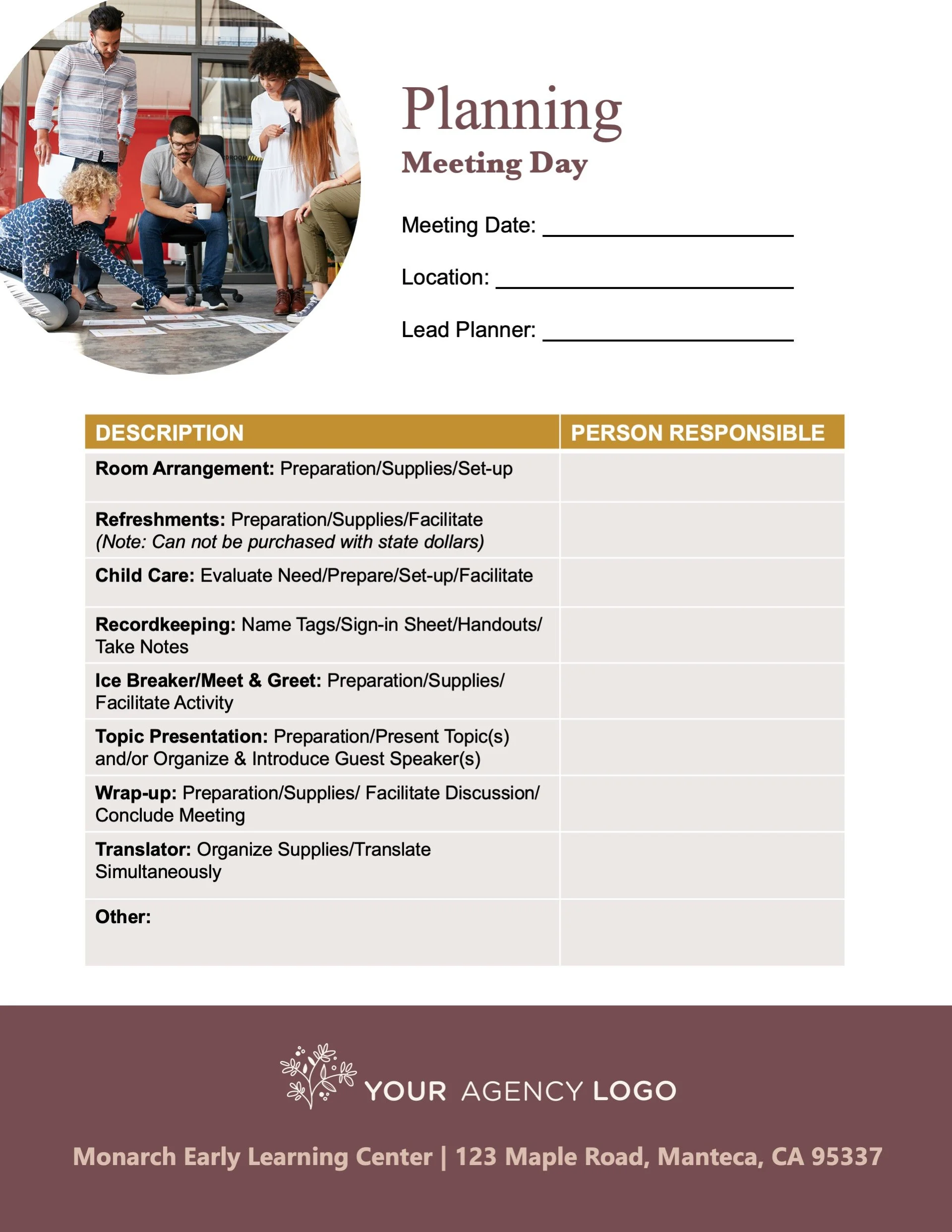


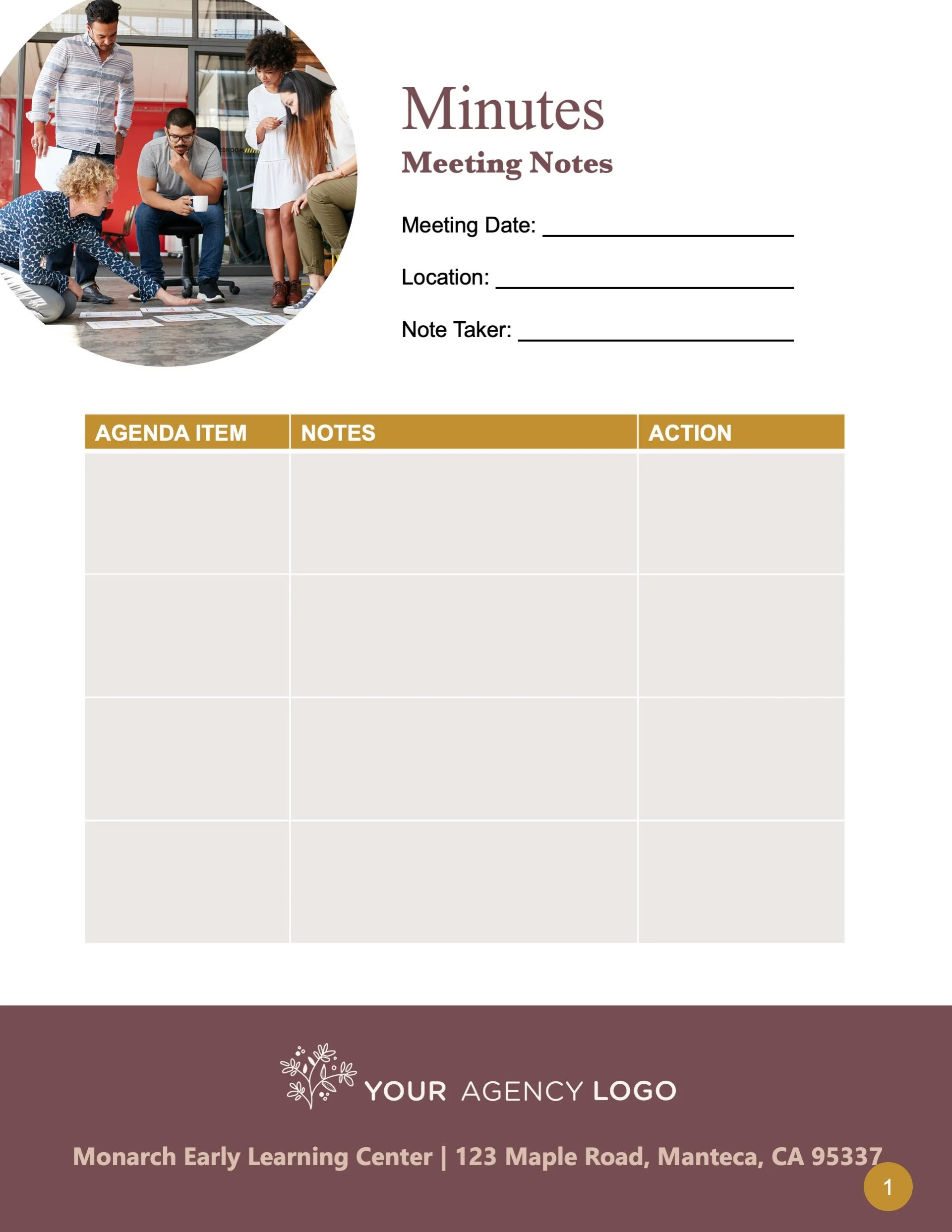

The regulations require that parent meetings with program staff are held. Note that there is no set number of meetings an agency must have.
What this might look like in a program:
Staff use the Parent Meeting Kit to assist with planning, organizing & documenting meetings
Parent Club meetings are held 4 times per program year
Meeting topics include items identified from Desired Results Parent Surveys, along with the Parent Club Meeting survey that is completed at the beginning of each program year
Parent Involvement opportunities are outlined in participant handbook
Parenting education & parent involvement evidence includes: Schedule/Parent Important Date calendar, Meeting Announcements, Agendas, Sign-in Sheets, Minutes, Desired Results Parent Survey analysis
Parent Advisory Committee

The regulations require a contractor to have a Parent Advisory Committee, also known as PAC that advises the contractor on issues related to services to families & children. This can be done in a formal or informal model. Some agencies have bylaws & others hold a meeting with questions. A program simply needs to ask parents what they want to see in the program.
What this might look like in a program:
Parent Advisory Committee (PAC) meetings are held quarterly to gather input from parents regarding issues & what they would like to see in the program related to services to families & children.
Evidence includes: Schedule/Parent Important Date calendar, Meeting Announcements, Agendas, Sign-in Sheets, Minutes, Summary of Findings/Action
Open Door Policy Statement

The regulations require that an agency have an open door policy that encourages parents to participate in the daily activities whenever possible.
Title 22 licensing regulations require open access during operating hours
Title 5 encourages parent participation
What this might look like in a program:
Statement located in participant handbook & bulletin board includes both access & encourages participation. A sample open door policy statement might state:
“You may visit your child’s classroom unannounced to observe your child at any time during operational hours. Our program is based upon a partnership with parents of the children enrolled. Parents are highly encouraged to participate in their child’s program.”
Parent Involvement Activites
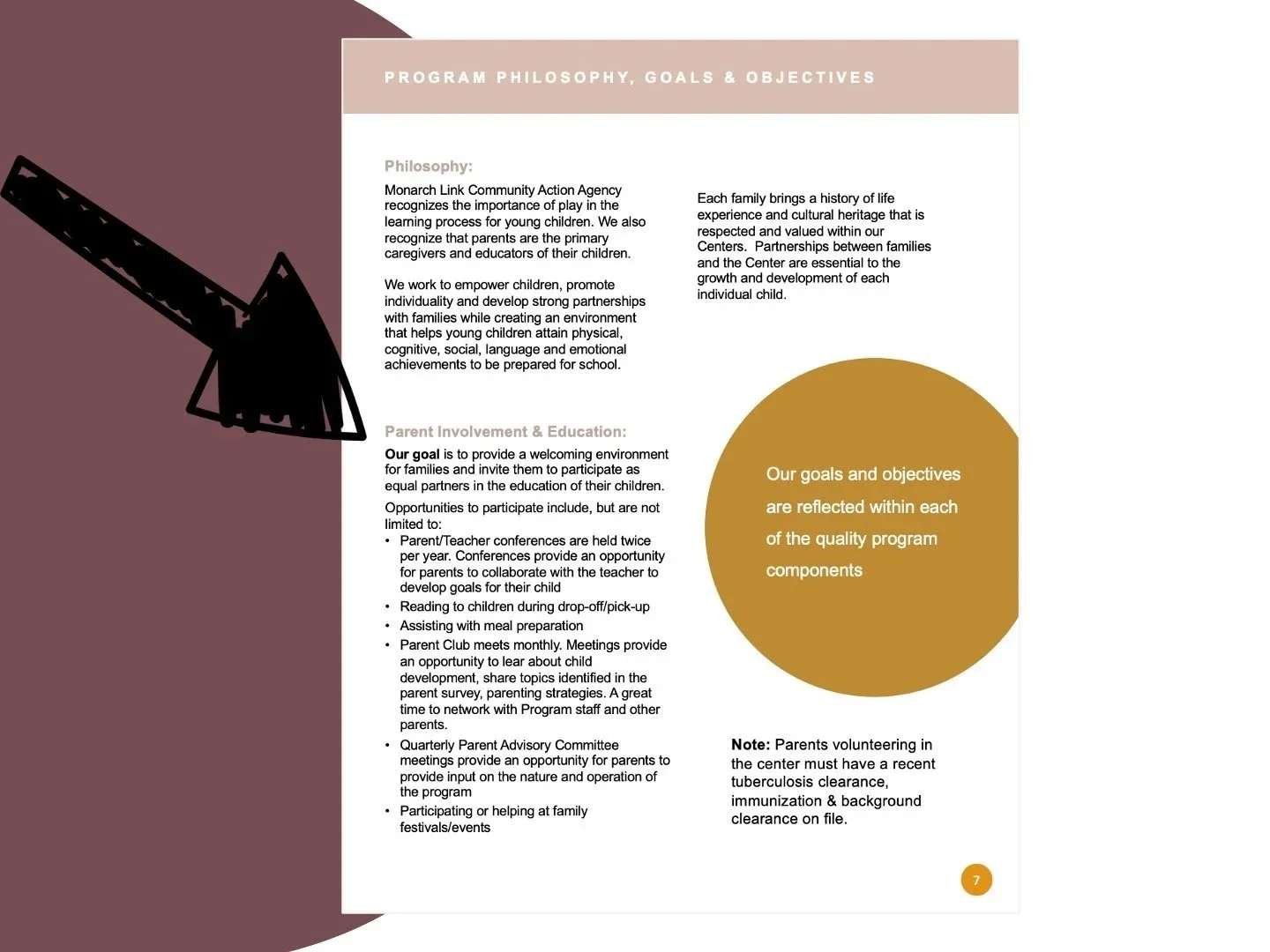
Parent involvement activities may be demonstrated through a range of resources.
Parent handbooks commonly highlight opportunities for engagement and outline any volunteer requirements. Additional evidence may include volunteer guidelines, required health clearances (such as tuberculosis and immunization records), and documentation of volunteer participation.
Complete Knowledge Check ❯
After reviewing the video lesson & sketch pad notes, it’s time to check for understanding by completing a Knowledge Check. Note that Individual Knowledge Checks will conclude with a Certificate.